
What Dermatologists Want You to Know About Chemical Peel Treatment in Florida?
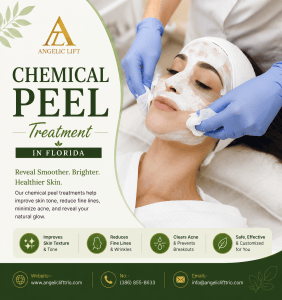
You look in the mirror and notice it. Fine lines around your mouth. Dark spots from years of Florida sun. Acne scars that just won’t budge. You’ve tried every serum and moisturizer under the sun, and nothing really moves the needle. Here’s what dermatologists want you to hear: chemical peel treatment in Florida might be the option you’ve been overlooking. It’s one of the most well-studied cosmetic skin treatments available, and when done right, the results are genuinely impressive. But there’s a lot to understand before you book an appointment.
What Exactly Is a Chemical Peel?
A chemical peel uses a specially formulated chemical solution to remove the outer layers of your skin. Think of it like hitting a reset button on your complexion. The solution causes a controlled injury to your skin’s surface. As those damaged layers peel away, newer and smoother skin takes their place.
The new skin that forms after a peel is usually smoother, has fewer lines and wrinkles, and looks brighter and more even in tone. That’s the whole point. You’re not damaging your skin. You’re giving it a chance to renew itself with some expert help.
What Skin Concerns Can a Chemical Peel Address?
This is one of the most common questions people ask, and the answer covers a surprisingly wide range. Chemical peels can help reduce or improve fine lines and wrinkles caused by sun damage and aging, certain types of acne, mild scarring, sun spots, age spots, freckles, uneven skin coloring, rough or dull skin, and dark patches called melasma that sometimes develop during pregnancy or from birth control use.
That said, peels aren’t the right answer for everything. Sagging skin, deep facial lines, and severe wrinkles don’t respond well to chemical peels. For those concerns, other options like laser resurfacing or a facelift may be more appropriate. A qualified provider can help you figure out which path makes the most sense for your skin.
The Three Types of Chemical Peels Explained
Not all peels are the same. They come in three different depths, and each one targets different concerns.
Light Peel (Superficial)
A light or “lunchtime” peel removes only the outermost layer of skin. It works well for fine wrinkling, acne, uneven skin coloring, and dry or rough sun-damaged skin. Recovery is quick, usually within hours to a few days, with little to no downtime. This is a great starting point for people new to chemical peel treatment in Florida, especially because it can be done in a series to build results gradually over time.
Medium Peel
A medium peel goes deeper, removing the outermost layer and the upper part of the middle skin layer. It works best for moderate skin discoloration, age spots, acne scarring, and fine to moderate wrinkles. Recovery takes about a week or more. You’ll need to plan for some downtime with this one, but the results tend to be more noticeable than a light peel.
Deep Peel
A deep chemical peel produces the most dramatic results. It penetrates down to the lower middle layer of skin and works best for moderate lines and wrinkles, extensive sun damage, deep acne scars, blotchy skin, and precancerous growths called actinic keratosis.
A deep peel requires pretreatment for up to eight weeks beforehand, has significant downtime during recovery, and can only be performed once on the face. This one is a bigger commitment, but for the right candidate, it can deliver results that other treatments simply can’t match.
What Happens During the Procedure?
Knowing what to expect takes a lot of the nerves out of it. A chemical peel can be performed in a doctor’s office or an outpatient surgery center. Your skin gets thoroughly cleansed first, and your eyes and hair are protected. A chemical solution is then applied to your skin. Common solutions include glycolic acid, trichloroacetic acid, salicylic acid, lactic acid, or carbolic acid (phenol).
During the peel, you may feel a warm to somewhat hot sensation that lasts a few minutes, followed by a stinging sensation. A cool compress may be applied to relieve the sting. The chemical is then washed off or neutralized. The whole thing is quicker than most people expect. And for deep peels, general anesthesia is used so you sleep through the procedure entirely.
How Do You Prepare for a Chemical Peel?
Prep work really does make a difference in how well your results turn out. In the weeks before your peel, avoid tanning and direct sun exposure for at least two weeks. Don’t use products containing retinoids one to two weeks before treatment. If prescribed antibiotics or antiviral medication, start taking it at least 24 hours before your appointment. And the area being treated must be completely free of any open sores, lesions, or skin infections.
Your provider will give you a personalized prep plan based on your peel type and skin condition. Follow it closely because skipping steps can affect your results or increase your risk of complications.
What Should You Expect During Recovery?
Recovery looks different depending on which peel you get. After a light peel, expect a sunburn-like reaction with redness and some scaling that lasts three to seven days. You can wear makeup immediately after or the next day, and additional peels can be repeated every two to five weeks until you reach your goal. After a medium peel, expect redness, swelling, stinging, and flaking. Blisters can develop, break open, and then crust and peel over seven to fourteen days.
You can wear makeup after five to seven days. After a deep peel, the treated area will be bandaged, and the healing process takes fourteen to twenty-one days. Sun exposure must be avoided for three to six months afterward, and you’ll need to wait at least fourteen days before wearing any makeup. A proper consultation with a licensed provider before any chemical peel treatment in Port Orange, FL, or elsewhere in Florida is essential. It protects you and helps set realistic expectations for your results.
FAQs
Q. How many chemical peel sessions do you need to see results?
Ans. It depends on the peel depth. Light peels typically need three to five sessions spaced two to five weeks apart. Medium peels usually show visible results after one treatment, with optional repeat sessions every six to twelve months.
Q. Can you wear sunscreen after a chemical peel?
Ans. Yes, and it’s actually required. Once your skin heals, daily broad-spectrum sunscreen is essential after any peel. Your new skin is more sensitive to UV damage, and sun exposure without protection can cause pigmentation issues or reverse your results.
Q. Is a chemical peel painful?
Ans. Most patients feel warmth and mild stinging during the procedure, which typically passes quickly. A cool compress helps ease the sensation. Deep peels use general anesthesia, so you won’t feel anything during the treatment itself.
Q. Can chemical peels be done on the body, not just the face?
Ans. Yes. Chemical peels are most commonly done on the face, but they can also be performed on the neck and hands to address sun damage, uneven tone, and texture concerns in those areas.
Q. Does insurance cover chemical peel treatment?
Ans. No. Chemical peels are considered a cosmetic procedure and are not covered by health insurance. Your provider can walk you through pricing and any available payment options during your consultation.
Book Your Chemical Peel Consultation at Angelic Lift
We know how frustrating it feels to look in the mirror and see skin that doesn’t reflect how you feel inside. You deserve a plan that’s built around your skin, your concerns, and your goals. At Angelic Lift in Port Orange, FL, our licensed team provides personalized chemical peel treatments in Port Orange, FL, using clinically informed protocols tailored to your unique skin type. Whether you’re starting with a light peel or ready to explore deeper options, we walk you through every step with care and expertise. Book your consultation with Angelic Lift today and take the first real step toward the skin you feel confident in.